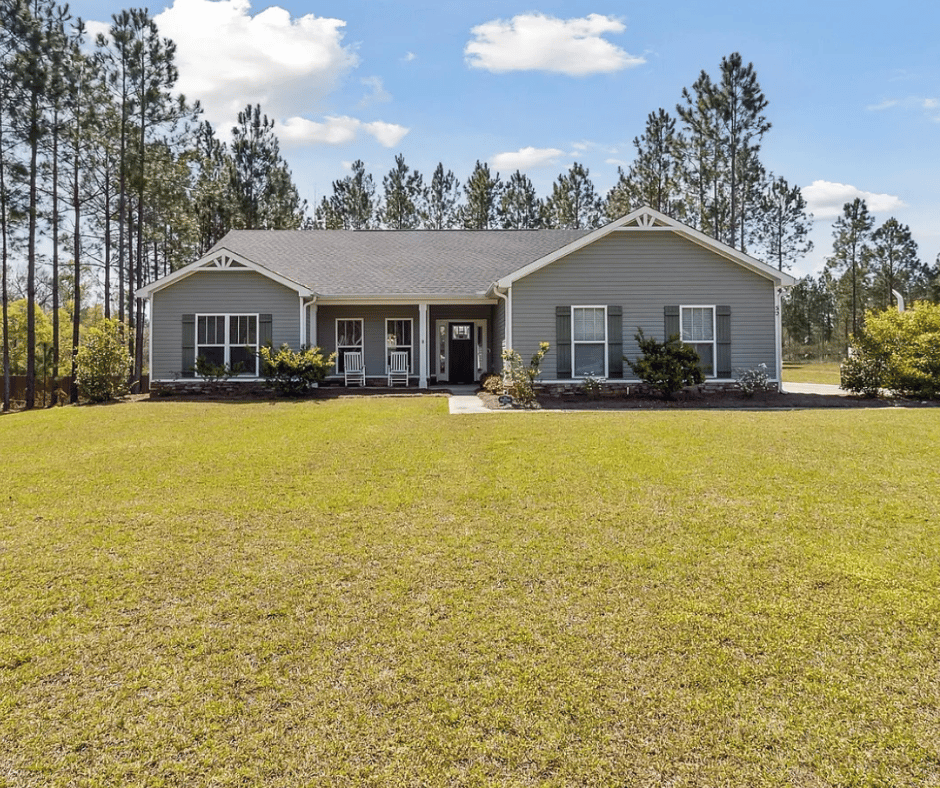
What Is the Best Strategy for Pricing a High-End Property With Land?
Direct answer: The best strategy is to price a luxury home with acreage using a two-part valuation (home + land utility), then reconcile it against the tightest buyer pool who can actually purchase it. You win by pricing for qualified demand—not “what it cost,” not “what you hope,” and not a generic price-per-acre rule.
What is the best strategy for pricing a high-end property with land?
- Start with the buyer pool (who will buy this exact type of property in Statesboro, Swainsboro, Metter, Claxton, Sylvania, Millen, Guyton, and Portal?).
- Value the home like a luxury home (condition, finishes, layout, privacy, and amenities), not like an average rural resale.
- Value the land based on utility (usable acreage, access, zoning, timber/ag potential, wetlands/floodplain, fencing, ponds, trails, and improvements).
- Pressure-test against the active market (current listings + recent pendings matter as much as closed sales).
- Use the first 14–21 days as a truth window (showing quality + feedback tells you if the price matches real demand).
Expanded explanation: Price for the right buyer, not the biggest number
High-end properties with land don’t price like suburban homes. The biggest pricing mistakes happen when a seller (or agent) treats acreage as a simple “price-per-acre add-on,” or assumes luxury features automatically translate to any rural market. In reality, a luxury + land listing lives inside a narrower buyer pool.
In markets like Bulloch, Emanuel, Candler, Evans, Screven, and Jenkins counties, plus areas like Guyton and Portal, demand can be very strong—but it’s also specific. The right buyer might be relocating, building a family compound, buying a hobby farm, seeking privacy, or upgrading into an estate-style home. Your pricing strategy needs to match those motivations and the financing reality behind them.
Here’s the practical approach: you value the home with luxury-appropriate comparables (even if they’re farther out), value the land based on what a buyer can actually do with it, and then reconcile both into a number that creates urgency among qualified buyers. That last step is where luxury listings are won or lost.
“When I was ready to sell my house a few months ago, I got back in touch with Deb Hagan, who had sold it to me five years earlier. Knowing the market as well as she does, she was able to sell it to the first couple she showed it to. Throughout the process, she was there to answer questions and to offer reassurance. Thanks again, Deb!”
— Client
Step 1: Build a comp range (not a single comp)
For luxury homes with acreage, there are often fewer “perfect comps.” Instead of forcing a match, build a comp range using:
- Closed sales that match the lifestyle and quality (even if acreage differs)
- Pending sales (the market’s most current vote)
- Active competition (what buyers are comparing you against today)
Then adjust logically for what actually moves the needle: construction quality, remodel level, pool/outbuildings, privacy, access, and whether the layout “shows” like a luxury property. If your home feels premium but your pricing is anchored to average neighborhood resales, you’ll underprice. If you price it like a coastal trophy home without the buyer base, you’ll overprice.
In rural luxury, the question isn’t “What’s it worth?” The question is “What will the best buyer pay within a reasonable time?” Your comp range should reflect that reality.
Step 2: Value the land by utility, not by acreage count
All acres are not equal. Pricing land correctly requires you to separate total acreage from usable and marketable acreage.
Land tends to command more value when it has:
- Access (road frontage, quality driveway, easements that are clear and usable)
- Buildability (zoning, setbacks, no major constraints)
- Improvements (fencing, barns, shops, irrigation, trails, cleared areas)
- Water features (ponds/creeks that are attractive and functional)
- Privacy (buffering, timber line, distance from neighbors)
Land can be discounted when it’s heavily constrained by wetlands, floodplain, limited access, irregular shape, or restrictions that reduce how a buyer can use it. This doesn’t mean the land is “bad.” It means it has a different buyer—and a different price.
Bottom line: you’re not selling acres. You’re selling options (privacy, recreation, livestock, future building sites, legacy). Price the options the land truly provides.
Step 3: Reconcile into a “qualified buyer price” and verify fast
Once you have a luxury home value range and a land utility value range, you reconcile them into a single list price. This is where strategy matters more than math.
Two practical rules:
- Price where the qualified buyer pool is thickest. If your likely buyer needs financing, your price must live where approvals and appraisals can realistically land.
- Let the first 14–21 days tell the truth. If you’re getting showings but not qualified showings, the marketing may be broad but the price may be high. If you’re getting qualified showings but no second looks, the property-to-price story isn’t convincing yet.
For luxury + land listings, the cost of overpricing is often bigger than people realize. It doesn’t just “take longer.” It can cause the market to label your property as stale, forcing larger reductions later—exactly what you were trying to avoid.
Misconceptions and key insights (that cost sellers money)
- “We’ll start high and come down.” In many cases, your best buyers are watching early. If you miss them, you don’t get a second first impression.
- “It appraised for X years ago.” Appraisals reflect a moment in time, and luxury + land demand shifts differently than average housing.
- “Acreage always adds value dollar-for-dollar.” Usability, access, and improvements drive value—not acreage count alone.
- “My upgrades guarantee top dollar.” Some upgrades are personal taste. The market pays most for upgrades that reduce buyer friction (roof, HVAC, kitchens/baths that feel current, curb appeal, and cleanliness).
Important considerations before you set the final number
- Timeline: Are you optimizing for highest possible price, or a clean sale within a defined window?
- Privacy needs: If discretion matters, pricing and buyer qualification become even more important.
- Land due diligence: Survey, access/easements, zoning, and known constraints should be clear before you go live.
- Show-ready reality: Luxury buyers notice presentation instantly—land and outbuildings included.
“We met Deb Hagan in 2014 when we listed our first house. 3 houses & a piece of property sold later and 3 houses & 2 pieces of property bought she will be our forever realtor. She’s seen our kids grow, our family grow and has become a special friend. Her & her husband are the most genuine people you’ll ever meet.”
— Client
FAQ
Should land value be priced separately from the home?
Conceptually, yes. You want to understand the home’s luxury value and the land’s utility value, then reconcile them into one market-accepted list price that fits the qualified buyer pool.
What if there are no true comparable sales for my luxury home with acreage?
Build a range using the best available closed sales, verify against pendings and actives, and use early buyer feedback (first 14–21 days) as a calibration tool.
Should I subdivide my land before selling?
Sometimes it expands the buyer pool, but it can also add cost, approvals, time, and uncertainty. The right answer depends on zoning, access, utilities, and your timeline.
How do I know if we overpriced the property?
If you’re not getting qualified showings (or you’re getting showings without serious follow-up) in the first few weeks, price is the first lever to evaluate—especially in luxury.
Next steps
If you’re selling a high-end property with land in Statesboro, Swainsboro, Metter, Claxton, Sylvania, Millen, Guyton, or Portal, the fastest way to price confidently is to build a clear comp range, value land by utility, and pressure-test the number against active competition and real buyer feedback.
Deb Hagan
Cell: (912) 737-4863
Office: (912) 489-0067
Email: [email protected]