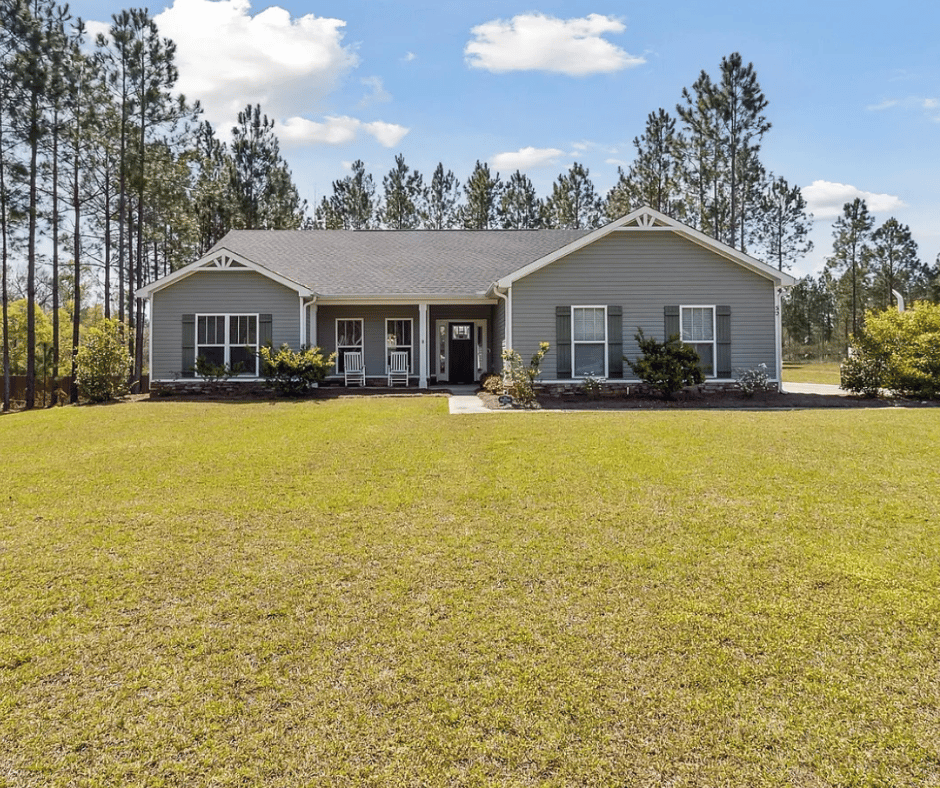
There is no single number of days that applies to every home in Southeast Georgia. How long your home takes to sell can depend on its price, condition, location, competition, buyer demand, marketing, showing accessibility, and the terms of the offer you ultimately accept. If you have a deadline for moving, the better approach is to build a selling timeline around your specific home and circumstances rather than relying on a broad market average.
How Long Will It Take to Sell My Home in Southeast Georgia?
- Pricing matters. Buyers compare your home with other available options, so your starting price can influence how quickly they respond.
- Condition and presentation matter. A home that is clean, prepared, photographed well, and easy to understand may make a stronger first impression.
- Your location matters. Buyer activity can differ between Statesboro, Swainsboro, Metter, Claxton, Sylvania, Millen, Guyton, Portal, and surrounding communities.
- Competition matters. Your home does not enter the market by itself. Buyers may be comparing it with several alternatives.
- An offer is not the same as a closing. You need to consider both time on the market and the time required to move from contract to closing.
- Your personal deadline matters. If you need to relocate, buy another home, or close by a certain date, your selling strategy should account for that from the beginning.
There Are Really Two Timelines When You Sell a Home
When homeowners ask, “How long will it take to sell my house?” they are often asking about two different things.
The first is how long it could take to get an acceptable offer.
The second is how long it could take to actually close after you accept that offer.
Those are not the same timeline.
Before you receive an offer, your home needs to be prepared, listed, marketed, shown, and evaluated by potential buyers. Depending on how the market responds, you may then negotiate price, closing date, contingencies, concessions, or other contract terms.
After an offer is accepted, there can still be several steps before closing. Depending on the transaction, those may include inspections, repair discussions, financing, appraisal, title work, and satisfaction of other contractual requirements.
This distinction becomes especially important if you have a specific deadline.
For example, if you need to move because of a job change, want to purchase another property, are downsizing, or need proceeds from this home for your next move, you should not assume that getting an offer means your timeline is complete.
A better selling plan works backward from when you actually need the transaction completed.
Your Asking Price Can Influence Your Selling Timeline
Pricing is one of the most important decisions you make when your home enters the market.
That does not mean the lowest-priced home automatically sells first. It means buyers evaluate the relationship between price and value.
Imagine two homes that appeal to a similar group of buyers. One is priced in a range supported by comparable properties, condition, features, and current competition. The other enters the market at a substantially higher price because the owner wants to “leave room to negotiate.”
Buyers may immediately recognize the difference.
If they believe the second property is priced beyond its competitive position, some may not schedule a showing at all. Others may decide to wait for a price reduction.
That can matter when time is important.
A homeowner can always reduce an asking price later, but you cannot recreate the first impression your listing made when it initially entered the market.
At the same time, pricing should not be based on fear. The objective is not to choose an artificially low number simply because you want to sell quickly.
The objective is to understand what buyers are comparing your home against and position it accordingly.
That requires local analysis. A home in Statesboro may face different competition from a property in Swainsboro, Metter, Claxton, Sylvania, Millen, Guyton, or Portal. Property type, acreage, neighborhood, condition, features, and price range can further change the comparison.
Condition and Presentation Can Affect Buyer Response
Price is important, but buyers do not evaluate price in isolation.
They evaluate what they receive for that price.
This is why two properties offered at similar prices can receive very different reactions.
A home does not necessarily need a complete renovation to compete effectively. However, buyers may notice maintenance issues, clutter, cleanliness, odors, poor lighting, unfinished projects, exterior appearance, and other details that affect their perception of the property.
Before listing, focus on improvements that make it easier for buyers to see and understand the home.
- Remove unnecessary clutter and personal items.
- Deep clean the interior.
- Address obvious maintenance issues where appropriate.
- Improve the first impression at the entrance and exterior.
- Make rooms easy to navigate and understand.
- Prepare the property for strong listing photography.
Major renovations require more consideration.
If your objective is to sell within a particular timeframe, spending weeks or months completing a large project may work against that objective. And money spent on an improvement does not automatically translate dollar-for-dollar into a higher selling price.
Before committing to a major project, ask a more useful question: Will this improvement materially change how my likely buyers view or value this property?
That is a much better starting point than assuming everything needs to be updated.
“Deb Hagan is more than just a real estate agent; she is part of our community and has watched it grow for 20 years. Deb was always quick to respond to any questions we had and was a pleasure to partner with. She combines her local knowledge, her industry expertise with a data-driven approach to ensure her clients make the best informed decisions. Whether you are buying your first home or selling a luxury estate, she will leverage her expertise to find the perfect match.”
Your Local Market Matters More Than a Generic Average
It is tempting to search online for the “average days on market” and use that number to plan your move.
The problem is that an average does not necessarily describe your home.
Your property competes within a specific segment of a specific market.
A house in Bulloch County may attract a different buyer pool than one in Emanuel County. A property in Candler County may have different competition than one in Evans, Screven, or Jenkins County. Guyton and Portal also have their own local considerations.
Even within one community, two homes can have very different selling experiences.
Price range can matter. Property condition can matter. Acreage can matter. Location can matter. The number of similar homes available when you list can matter.
That is why the most useful question is not simply, “How fast are homes selling?”
It is:
“How are homes that realistically compete with mine performing?”
Answering that question requires looking at relevant local data when you are preparing to list. That includes recent comparable sales and current competing properties.
Because market conditions change, that analysis should be performed close to the time you are making your selling decision rather than relying on an old statistic or broad statewide number.
Why Some Homes Take Longer to Sell
When a property sits on the market, homeowners sometimes assume there must be one obvious problem.
Often, the explanation is more complicated.
Buyer response may reflect the relationship between price, condition, location, competition, presentation, and marketing. Sometimes a home appeals to a narrower pool of buyers. Sometimes the terms a seller needs make the transaction more difficult for certain purchasers. Sometimes buyers simply have several competing properties to choose from.
This is why changing the price should not automatically be the first response to every slow listing.
Before making a change, look at the evidence.
Are buyers viewing the property but not making offers? Are there very few showings? What competing properties have entered the market? Have similar homes gone under contract? Is there consistent feedback about the same issue?
Those signals can help identify whether the problem is price, presentation, property condition, competition, marketing, or some combination of factors.
Important Considerations If You Have a Deadline
If you need to be sold by a certain date, communicate that objective before your home goes on the market.
Your deadline can affect more than your listing date.
If you are buying another property, you may need to coordinate two transactions. If you are relocating, you may have moving and possession dates to consider. If you need proceeds from the sale to complete another purchase, financing and contract structure can become particularly important.
You should also think about your flexibility.
What happens if the home takes longer to sell than expected? What happens if you receive an attractive offer with a closing date later than you hoped? Would you prioritize a faster closing over another contract term?
There is no universal correct answer.
The point is to identify your priorities before you are negotiating an offer.
A good selling strategy is not simply about getting your home under contract quickly. It is about creating a transaction that works with the larger move you are trying to make.
“Deb Hagan and her team helped us get a contract on our home in just 2 1/2 weeks. We closed on our house about two months after listing it in a market that was averaging four months. She was always available and prompt at returning phone calls. Thanks Deb, for all of your help!”
FAQ
How long will it take to sell my home in Southeast Georgia?
There is no single timeline that accurately applies to every Southeast Georgia property. Your selling time can depend on price, condition, location, competing inventory, buyer demand, marketing, showing accessibility, and the terms of the eventual offer. A property-specific market analysis is more useful than relying on a broad average.
What can I do to help my home sell faster?
Start with a realistic pricing strategy, prepare the property carefully, use strong photography and marketing, and make reasonable showing access available to qualified buyers. You should also evaluate buyer feedback and competing listings after the property enters the market rather than assuming your original strategy should never change.
Does accepting an offer mean my home is sold?
Not yet. An accepted contract is an important milestone, but the transaction generally still needs to move through the contract-to-closing process. Depending on the sale, that can involve inspections, financing, appraisal, title work, negotiations, and satisfaction of other contract requirements.
Find Out What a Realistic Timeline Looks Like for Your Home
If you are thinking about selling, you do not need to guess how your property might perform based on a national headline or a general market average.
A better starting point is to examine your specific home against the properties buyers are actually comparing it with.
That can help you answer the questions that matter: How should the home be positioned? What should you do before listing? What price range does the evidence support? What could interfere with your timeline? And when should you start if you need to move by a particular date?
If you own a home in Statesboro or Bulloch County, Swainsboro or Emanuel County, Metter or Candler County, Claxton or Evans County, Sylvania or Screven County, Millen or Jenkins County, Guyton, Portal, or the surrounding Southeast Georgia area, Deb Hagan can help you evaluate your property and develop a selling timeline based on your goals.
Deb Hagan
Cell: (912) 737-4863
Office: (912) 489-0067
Email: [email protected]
You do not have to be ready to list tomorrow to start planning. If you know when you would like to move, working backward from that date can help you understand when to prepare, when to list, and what decisions need to be made along the way.